
Castle Rock, CO · Garage Door Service
Why Castle Rock's Older Doors Fight the Cold Every Winter
Most Castle Rock garages went up between 1938 and 2005, median 1990, before current insulation code. Here's what that means for doors in a cold, severe climate.
- Repairs & new doors
- Springs & openers
- Serving 5 nearby communities
Season by Season
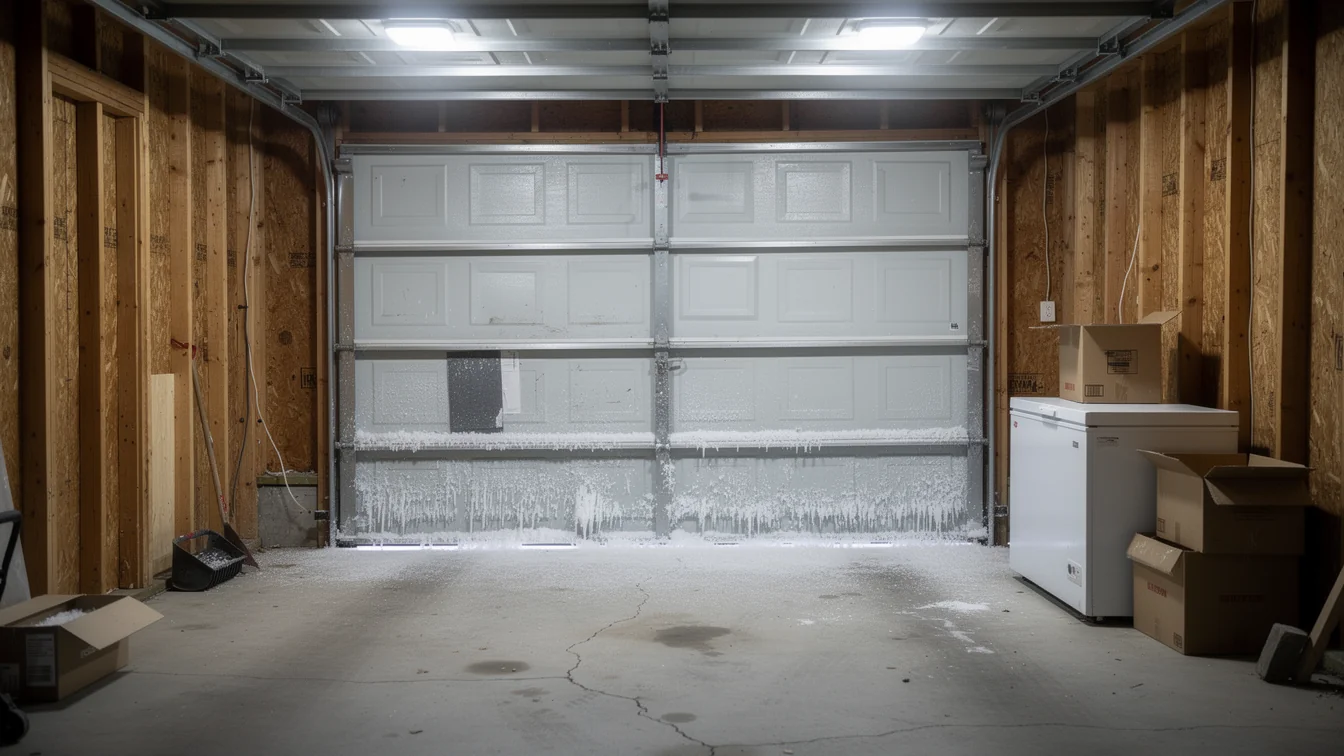
Castle Rock sits in a cold, severe climate band, and that shows up in the garage long before it shows up anywhere else in the house. Fall is when a door that's been fine all summer starts sticking on the first cold mornings - the weatherstripping has shrunk, the rollers have dried out, and nobody notices until the temperature drops. Winter is the hard season. A double door with an uninsulated or thin-skin panel, which is common on houses built in the 1980s and 90s stock that makes up most of the area, will flex and bind when the steel contracts. Cables and springs lose some elasticity in the cold too, and that's when a spring that was already near the end of its life lets go. Spring and summer are catch-up time - this is when it's worth checking the door while it's not actively fighting you, because a torsion spring or a worn hinge found in June is a scheduled job, not an emergency call in January. None of this is unique to one house. It's the pattern across a service area where most garages were built between 1938 and 2005, median around 1990, long before insulation and sealing were part of the standard build.
When to Call Someone
Call before the door fails completely, not after. If a door built in the 1980s or 90s is dragging, grinding, or sagging on one side, that's usually a roller or hinge problem you can fix on a bench, not a full replacement. If the bottom panel has a gap you can see daylight through, that's a weatherstrip and bottom seal job - cheap, and worth doing before the cold really sets in, given the climate band this town sits in. The one we don't want a call about after the fact: a spring that's already broken and someone's tried to force the door open or closed with the opener still engaged. That strains the opener motor and can bend the track. If the door is original to a house built before 2000, and it's never been serviced, that's a reasonable time to have someone look at the spring tension and the panel insulation before winter, not during it.
What Local Conditions Do
A severe cold climate does specific things to a garage door that a mild one doesn't. Steel contracts and the tolerances on an older track system get tighter, which is why doors that ran fine in August start catching in November. Lubricant that was fine in summer gets thick and sluggish in cold, which adds strain to the opener and the springs both. None of this is dramatic - it's incremental wear that shows up faster on doors built before current insulation standards, which describes a large share of the housing here, since the median build year across this area is around 1990. A door with a foam-core panel handles that cycle a lot better than a single-skin steel door from the same era. The honest limitation: insulating an old door panel after the fact, rather than replacing it, only gets you partway there - the frame and seals are usually the bigger leak, and foam board kits won't fix a door that's already racking on its track.
The Situation
This is a service area of roughly 57,000 households and about 40,000 owner-occupied houses, and the housing stock runs from 1938 up through 2005 with a concentration in the 1980s and 90s across the named areas nearby - Castle Pines Village, The Meadows, Terrain, Franktown, and the rest out toward Larkspur and Woodmoor. A door that's original to a house from that era was built to a code that didn't require the insulation or sealing standards used today, and the cold severe climate here makes that gap noticeable every winter rather than once in a while. We're not going to tell you every old door needs replacing - plenty just need the seals, rollers, and spring tension brought current. But if a door from that build window has never had that done, winter is where it shows.
Frequently asked questions
Why does my garage door only act up in winter?
Steel contracts in cold weather and old lubricant thickens, which tightens tolerances on tracks and rollers that were already worn. In a cold, severe climate like this one, that shows up as sticking, grinding, or a spring finally giving out after years of slow fatigue.
Is my door too old to be worth fixing?
Not necessarily. A lot of houses here were built in the 1980s and 90s, and many of those doors just need rollers, seals, or spring work, not full replacement. If the panel itself is racking or the frame is bent, replacement usually makes more sense than repeated repairs.
Does insulating an old door panel actually help?
Some, but it's often not the whole fix. Houses built before current insulation standards usually leak more heat through the frame and seals than through the panel itself, so a foam kit alone won't solve a door that's already loose on its track.
Related garage door services in Castle Rock
More garage door guides
Book garage door service in Castle Rock
Call now or request a quote - tell us what the door is doing and where you are.