Castle Rock, CO · Garage Door Service
What an Older Garage Door in Castle Rock Is Actually Worth Fixing
Castle Rock homes run 1938 to 2005, most from the 1980s-90s, in a cold-severe climate. Here's how we decide what's worth repairing on an older door and what isn't.
- Repairs & new doors
- Springs & openers
- Serving 5 nearby communities
Season by Season
Winter is where an older door in this town shows its age first. Castle Rock sits in a cold-severe climate band, which means the steel in an older door panel goes through more freeze-thaw cycling each winter than it would somewhere milder. That cycling stiffens old lubricant on rollers and hinges, and it's hard on torsion springs that were never rated for the temperature swings we actually get. Come spring, the same doors that stuck shut in January start sagging on one side as moisture works into old wood jambs or rusted hinge plates. Summer is usually the quiet season - doors move freely, openers don't strain as much, and most of the wear from winter has already happened, it just hasn't failed yet. Fall is when we tell people to get ahead of it: lubricate what can be lubricated, check cable fraying, and look hard at a spring that's already stretched or discolored before the cold comes back. On a door built in the 1990s, which is the median age of housing stock out here, that seasonal cycle has already happened thirty-plus times. Metal fatigues. Fasteners back out. None of that is dramatic on its own, but it adds up by the time winter hits again, and that's usually when we get the call.
When to Call Someone
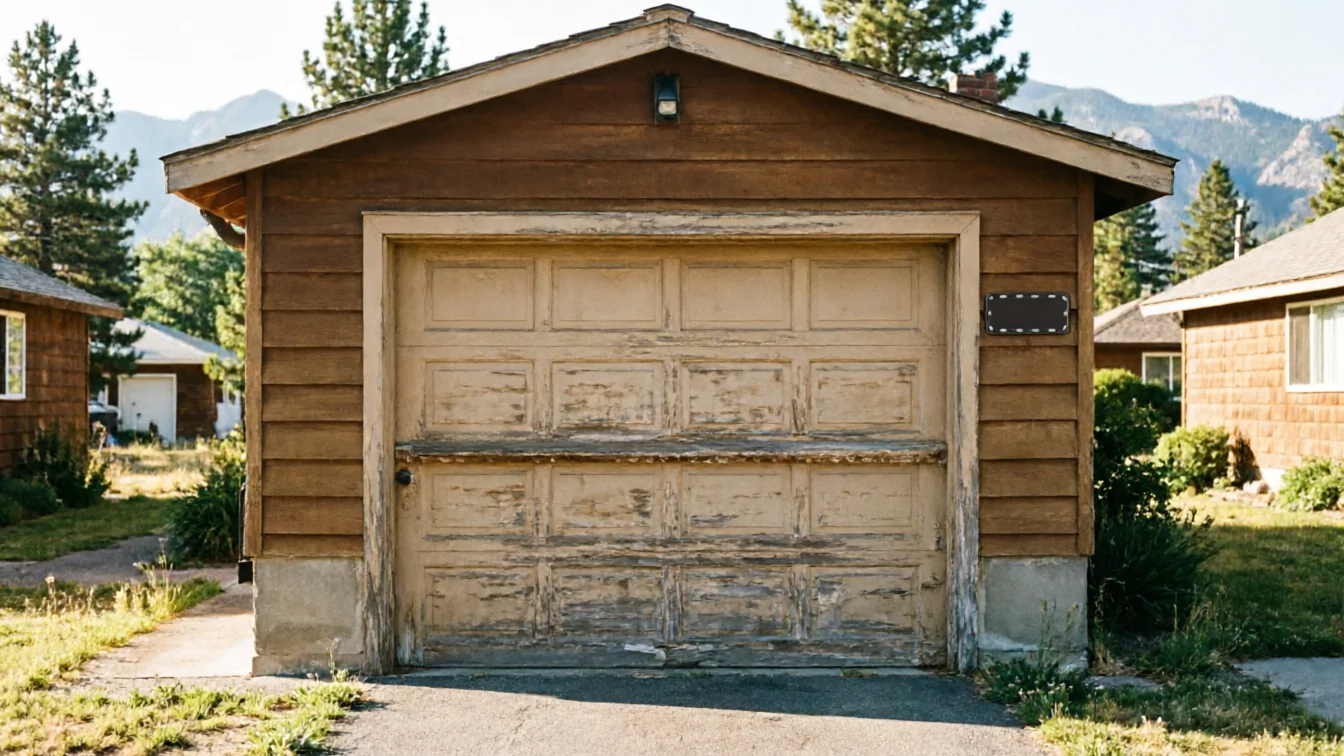
Most of the homes we work on here went up between 1938 and 2005, with the bulk of that stock dated to the 1980s and 90s, so the typical door we're looking at is pushing twenty-five to thirty-five years old. At that age, a few specific signs mean it's time to call rather than keep adjusting it yourself. A torsion spring with visible gap at the coil, a door that slams the last foot of travel instead of settling, or an opener straining audibly on a door that used to lift quiet - those are mechanical signs the original hardware is at its limit, not cosmetic ones. If the bottom panel is rusted through or the door has been painted over enough times that the seams are filled in, that's a structural question, not a tune-up. We'll also tell you straight if a repair isn't worth doing: a single bent track on a door that's otherwise sound is worth fixing, but a cracked wood panel on a thirty-year-old door, paired with a spring that's already failed once, usually means you're paying twice for the same problem. We don't push replacement when a repair will hold. We also won't keep patching a door that's telling you it's done.
What Local Conditions Do
Cold-severe conditions don't just affect how a door feels to lift - they affect the materials directly. Steel contracts in the cold, which widens gaps around weatherstripping on doors that weren't built with much insulation to begin with, and a lot of the 1980s-90s stock here falls into that category. That's worse on a north-facing garage that never gets direct sun to warm the slab or the door skin during the day. Concrete slabs in this climate band also move slightly with frost, which over enough winters can throw an older track out of plumb by a few degrees - not enough to be obvious, but enough to make a door bind at the same spot every time. Garage interiors that aren't heated or insulated see bigger daily temperature swings than the living space next to them, and that swing is what breaks down lubricant, dries out seals, and makes steel springs more brittle than they'd be in a milder climate. None of this means every older door is in trouble. It means the failure points on a door built for this area are predictable, and most of what we see on service calls traces back to the same handful of cold-weather causes rather than age alone.
The Situation
Across the service area's roughly 56,981 households, about 40,285 are owner-occupied houses, which is the group actually making these repair-or-replace calls, and the 22 named sections of town that make up most of that 1980s-90s stock share the same torsion spring and panel designs, which is why we see the same failure points over and over. With a median household income of $152,319 in this area, replacement with a better-insulated door is often the better math than it would be in a lower-income market, especially once a homeowner is facing a second or third repair on the same original door. That said, we won't tell you to replace a door just because it's old. A door from the 1990s with a sound frame, one failed spring, and no rust is a repair, full stop. Where it tips toward replacement is when the insulation, the panel condition, and the spring system are all original and all tired at once - at that point you're paying repair prices for a door that still performs like a 1990s door in a climate that's harder on it than it was thirty years ago. One honest limit: parts for doors built before the 1980s can take longer to source than a newer unit, and we'll tell you that up front rather than let a repair stall out.
Frequently asked questions
How old does a garage door have to be before repair stops making sense?
There's no fixed age - it depends on what's failing. A twenty-year-old door with one bad spring is a repair. The same door with a cracked panel, worn-out insulation, and a second spring failure within a couple years is usually a replacement, because you'd be paying repair prices repeatedly for a door that's still underperforming.
Why do garage doors in Castle Rock fail more in winter?
This area sits in a cold-severe climate band, so steel panels, torsion springs, and track hardware go through more freeze-thaw stress each year than they would in a milder climate. That stress dries out lubricant, stiffens metal, and is the main reason winter is when most older doors finally show a problem that's been building for years.
Is it worth insulating an older door instead of replacing it?
Sometimes. If the door frame and panels are sound, adding insulation can help with the temperature swings common in this area's garages. But a lot of the 1980s-90s stock here has panels too far gone to retrofit well, and at that point a new insulated door is the more durable fix.
Related garage door services in Castle Rock
More garage door guides
Book garage door service in Castle Rock
Call now or request a quote - tell us what the door is doing and where you are.