
Castle Rock, CO · Garage Door Service
What Castle Rock's Climate and Housing Stock Mean for Your Garage Door
Castle Rock homes built 1938-2005 face cold-climate stress on seals and tracks. See seasonal wear patterns and when a garage door call makes sense here.
- Repairs & new doors
- Springs & openers
- Serving 5 nearby communities
Season by Season
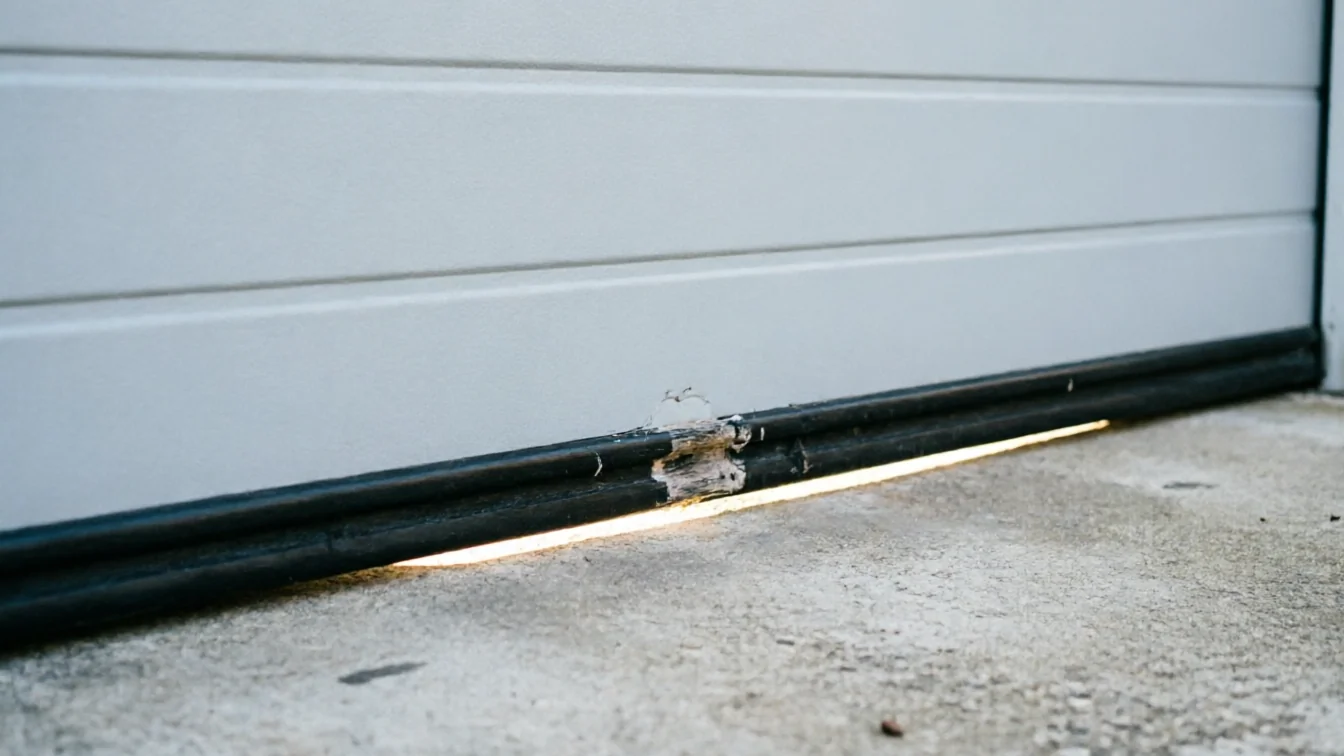
Castle Rock sits in a cold-climate band with severe winter stress, and that shows up on garage doors in a predictable order through the year. Early winter is when weather seals and drafts become the first complaint - the bottom seal on a door installed in the 1990s has usually hardened and cracked by now, and cold air finds the gap at the slab. Mid-winter is spring and cable season: steel contracts, lubricant thickens, and torsion springs built for a 1990s-era door start working harder than they were sized for. Spring thaw brings moisture into tracks that sat dry all winter, which is when rollers that were already worn start binding instead of rolling. Summer is the easiest stretch - openers run cooler and panels aren't fighting temperature swings - but it's also the best window to deal with the seal you ignored in December, because replacement rubber seats better above freezing. Fall is for catching what you put off: re-checking balance, swapping a brittle seal, greasing hinges before the cold comes back. None of this is dramatic. It's steady wear from a climate that swings hard, on hardware that in a lot of these houses is older than the owner who's calling.
When to Call Someone
Call before the door fails completely, not after. A door that's noticeably heavier to lift by hand, or an opener that strains and reverses partway up, usually means a spring that's lost tension - common on original hardware from houses built in the 1980s and 90s, which make up most of the stock across this area. That's a same-day problem, not a wait-and-see one, because a spring under uneven load can let go. A door that drags, sticks, or rattles going over the same spot on the track points to a bent section or worn rollers, which is worth a call before it strands the door half-open in cold weather. Drafts around the bottom seal or daylight visible at the corners are lower urgency - real, but not urgent - and can usually wait for a scheduled visit rather than an emergency one. One honest limit: if a door is original to a house built before the 1960s and the opener or spring system is long discontinued, repair parts can be hard to source, and replacement ends up being the straighter path than hunting for obsolete hardware. We'll tell you that straight rather than stringing along a repair that won't hold.
What Local Conditions Do
The housing stock across this service area runs from 1938 to 2005, with the median build year around 1990, and it's spread across 22 named areas that are mostly 1980s and 90s construction. That matters because garage door hardware from that era - torsion springs, chain-drive openers, single-layer steel panels - was built for a different set of expectations than what's sold today, and thirty-plus years of a severe cold climate has worn on all of it in the same way: seals gone brittle, lubricant gummed up, springs fatigued past their rated cycles. Severe cold doesn't just mean cold mornings; it means repeated freeze-thaw cycling that works metal fatigue and shrinks rubber seals faster than a mild climate would. A door that would still be fine after thirty years in a temperate area is often due for real attention here by year twenty. That's not a sales pitch - it's just what the climate band does to hardware over time. It's also why a seal that looked fine last October can be letting in a draft by January; the material failure is cumulative, not sudden.
The Situation
This service area covers 56,981 households and 40,285 owner-occupied houses, with a median household income of $152,319 - high enough that replacing an aging insulated steel door or a worn opener is well within reach for most owners here, rather than a stretch. Nearby communities in this coverage area span a wide range of distances and settings: Terrain sits about 2 miles ENE and The Meadows about 3 miles NW, both close-in; Castle Pines Village and Castle Pines run 5 to 6 miles out; Franktown and The Pinery sit around 6 to 7 miles; and farther out, places like Larkspur, Perry Park, and Elizabeth run 10 to 20 miles. That spread means housing age and exposure vary a fair amount even within one service territory - a door in a close-in 1990s-built neighborhood faces different wear than one twenty miles out in a more exposed, older setting. We work across that whole range, and the approach to a repair call changes depending on which end of it a house sits on.
Frequently asked questions
Why does my garage door feel heavier to lift every winter?
Cold temperatures stiffen lubricant and can reveal a torsion spring that's already lost tension from years of cycling. In a severe cold climate like this one, a spring near the end of its life often shows up first as extra resistance on cold mornings before it fails outright. Worth checking before it lets go under load.
My house was built in the early 1990s - is the original door hardware still any good?
A lot of it is still running, but 1980s-90s hardware was built for lighter use cycles than today's doors see. Springs and openers from that era are usually past or near their rated cycle count. We can check balance and spring tension on a visit rather than guessing.
Is it worth fixing an old door instead of replacing it?
Sometimes. If the frame and track are sound and parts are still available, a repair holds up fine. If the door is original to an older house in this area and the opener or spring system is discontinued, sourcing parts gets hard, and replacement is usually the more honest answer.
What causes drafts around the bottom of my garage door?
Almost always a worn or hardened bottom seal - common once a door passes fifteen to twenty years in this climate, where freeze-thaw cycling breaks down rubber faster than milder weather would. It's a low-urgency fix but worth scheduling before winter sets in fully.
Related garage door services in Castle Rock
More garage door guides
Book garage door service in Castle Rock
Call now or request a quote - tell us what the door is doing and where you are.