
Castle Rock, CO · Garage Door Service
What a Service Call Actually Covers in Castle Rock
A look at what a Castle Rock Garage Door Pros service call actually checks, tied to this town's 1938-2005 housing stock and severe cold climate band.
- Repairs & new doors
- Springs & openers
- Serving 5 nearby communities
Season by Season
Castle Rock sits in a severe cold climate band, and that shapes what we look at depending on the month. Coming out of winter, we check torsion springs for ice-stiffened coils and look at weatherseal on the bottom panel, because freeze-thaw cycling is what cracks vinyl seals here, not just age. Through summer, the issue shifts to track alignment - the swing from near-zero nights to hot afternoons that this area sees moves wood and steel framing just enough to throw rollers out of true, especially on doors installed before the 1990s. Heading into fall, we're back to checking opener force settings, since a door that closed fine in July can bind on a track that's contracted with the first cold snap. None of this is a single annual tune-up kind of thing - the cold band means the hardware is working through a wider temperature swing most of the year than a lot of places see at all. A call in January isn't the same as a call in June, and we set up the inspection differently depending on which one we're on.
When to Call Someone
If a door won't open past a few inches, or the cable has jumped the drum, that's not a DIY afternoon - call before anyone forces it further. Grinding or a loud bang from the spring area usually means it's already broken or about to be, and a broken torsion spring under tension is the single most dangerous thing in a garage. Beyond the obvious failures, call if the door has started opening unevenly or dropping on one side - on the 1938-2005 stock common across this service area, that's often a cable or a drum, not the opener, and running the opener anyway speeds up the real damage. One honest note: if your door is still on original hardware from the 1980s or earlier, a service call to patch one part often means replacing three more within the year, and sometimes the straight answer is to talk about a new door instead of another repair.
What Local Conditions Do
With median household income here at $152,319 and over 40,000 owner-occupied houses across the area, a lot of these garages hold more than a car - workshops, gym equipment, storage - which means the door cycles more per day than a strict two-trips-a-day house would see. That adds up faster on hardware built for an average use pattern. The severe cold band also means condensation inside the garage in winter, which we see show up as rust starting at the bottom roller brackets before it ever reaches the springs. Houses built across the 1938 to 2005 window, with most of the stock dating to the 1980s and 90s, often still carry the original track spacing and spring sizing from construction, sized for the doors and openers of that era rather than the heavier insulated doors a lot of owners have since swapped in. A mismatch between spring tension and a newer, heavier door shows up as an opener straining on every cycle, long before it fails outright.
The Situation
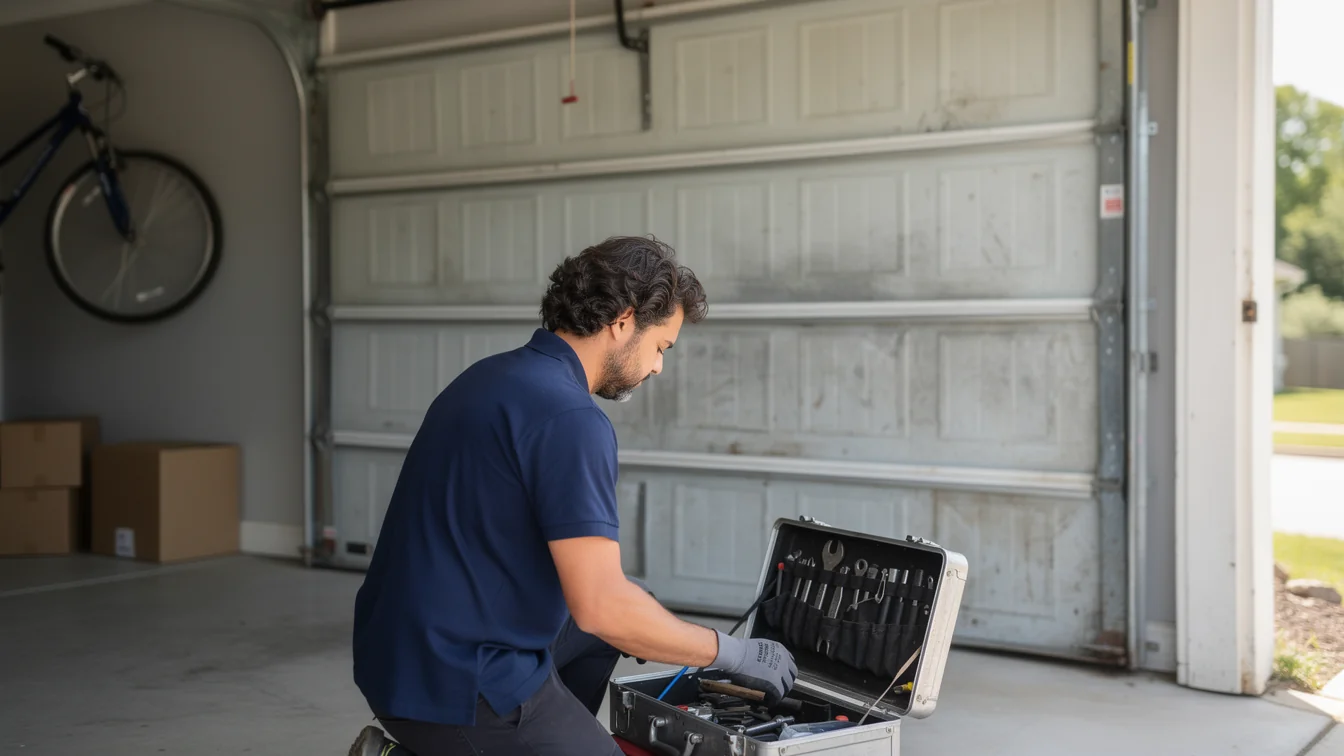
A straightforward service call starts with the spring and cable system, since that's where the stored energy lives and where failure is most dangerous. From there we check track alignment, roller condition, and the opener's force and travel settings - on a house from the 1980s-90s stock that's common across the 22 named areas in this service area, those settings have usually drifted from whatever was dialed in at install. We test the auto-reverse safety function every time, no exceptions, because it's the one check that actually matters if something goes wrong later. What we don't do on a standard call is a full panel replacement or a structural header repair - those get quoted separately once we know what's actually needed. For a household in this area with a garage doing double duty as storage or a workshop, that inspection is also a chance to flag wear before a spring lets go on a Saturday morning with the car trapped inside.
Frequently asked questions
How often should I get my garage door serviced in Castle Rock?
Given the severe cold band here, a yearly check before winter catches most of what the freeze-thaw cycle stresses - seals, springs, and track alignment. If your door sees heavy daily use, twice a year keeps the hardware ahead of wear instead of catching up to it.
Is my old garage door hardware a problem?
If your house dates to the earlier end of the 1938-2005 range common in this area, the original track and spring sizing may not match a heavier door you've since installed. That mismatch strains the opener gradually, so a service call can catch it before the spring fails outright.
Do you replace garage doors or just repair them?
We do both, and we'll tell you honestly which makes sense. On older original hardware, repeated small repairs often cost more over a year than replacement, so we'll say so rather than patch it a fourth time.
Related garage door services in Castle Rock
More garage door guides
Book garage door service in Castle Rock
Call now or request a quote - tell us what the door is doing and where you are.